
Clearance fit
Easy assembly; used for moving parts or joints that require regular disassembly.
H7/g6 / H7/h6
Typical use: Guides, locators, sliding parts
Standards
Compare clearance, transition, and interference fit types, then evaluate your actual tolerance ranges.
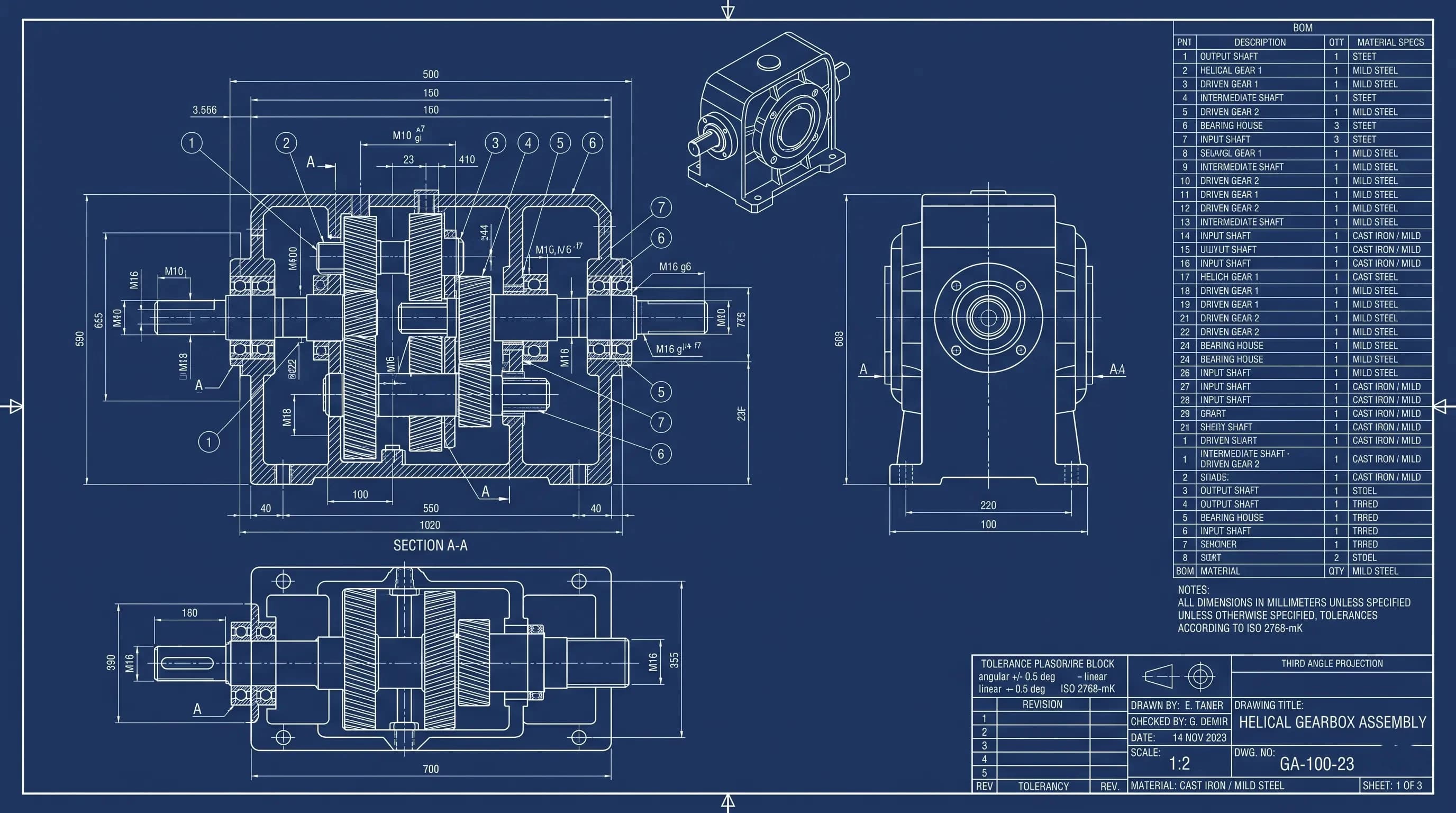
Letter defines fundamental deviation zone; number defines tolerance grade (IT).
Select by function need: assembly ease, centering precision, or torque transfer.
Easy assembly; used for moving parts or joints that require regular disassembly.
H7/g6 / H7/h6
Typical use: Guides, locators, sliding parts
May yield small clearance or slight interference; common for accurate centering.
H7/j6 / H7/k6
Typical use: Gear hubs, precise centering
Negative clearance; often requires press fit or thermal assembly.
H7/n6 / H7/p6
Typical use: Permanent torque transfer joints
Mini Tool
Enter hole and shaft min/max values to classify fit behavior.
Clearance fit
+0.007 mm
+0.041 mm
Compact examples for nominal 10/20/30 mm. Confirm final limits from ISO 286 tables for your exact range.
| Nominal (mm) | H7 hole | g6 shaft | k6 shaft | p6 shaft |
|---|---|---|---|---|
| 10 | 0 / +15 µm | -14 / -5 µm | +2 / +11 µm | +20 / +29 µm |
| 20 | 0 / +21 µm | -20 / -7 µm | +3 / +16 µm | +24 / +37 µm |
| 30 | 0 / +25 µm | -25 / -9 µm | +4 / +20 µm | +28 / +44 µm |